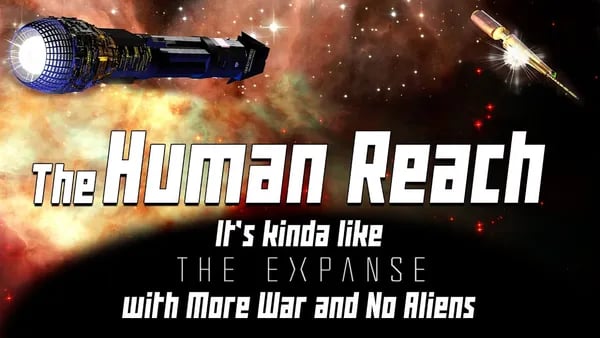


Confession: The first time I picked up John Lumpin’s Human Reach series , I expected a lesser echo of The Expanse. Instead, I tumbled into a world where space explorers wrestle with bureaucracy, corner-shop politics, and the kind of war that feels just one headline away from our own. Forget the shiny, utopian tropes—this is future history written with dirt under its fingernails, and for anyone who’s ever looked at science fiction and wondered 'Could we actually get there?'—these books demand attention. Let's take a closer look, no replicator required.
Space Colonization Minus the Rose Tint: A World Uncomfortably Close
When most people imagine realistic space colonization , they picture gleaming cities, advanced technology, and a fresh start for humanity. The Human Reach series shatters that illusion, offering a near-future that feels uncomfortably close to our own world. Here, the dream of settling the stars is tangled with the same old messes we’ve never quite cleaned up on Earth.
Familiar Tech, Unforgiving Physics
The Human Reach universe begins in the year 2139, but its technology is strikingly familiar. There are no magical warp drives or benevolent aliens to save the day. The only real leap is stable wormhole technology, and even that is tightly bound by rules and limitations. It’s not a narrative shortcut; it’s a tool, used with the kind of care you’d expect from real engineers and physicists. This commitment to plausible science grounds the story, making every challenge and setback feel earned.
Colonial Claims: Echoes of Today’s Power Struggles
The struggle for territory in the solar system mirrors today’s global politics. China and a revitalized Japan are the dominant forces, while America—once the leader in space—finds itself scrambling for relevance, limited to just 3.25 habitable worlds. This isn’t the usual space opera where the U.S. leads the charge; instead, the series explores what happens when old powers fade and new ones rise, all while the stakes are planetary.
Terraforming in Science Fiction : Messy, Dangerous, and Real
Forget the fantasy of instant paradise. Terraforming in science fiction is often romanticized, but in Human Reach, it’s a dangerous, slow, and dirty process. Settlers face toxic air, unpredictable weather, and the ever-present threat of failure. The people drawn to these worlds are a mix of hopeful pioneers and those society would rather forget. As one character observes:
“We exported all our crap to these planets. You're twisted up over that.”
Colonies become both an opportunity and a dumping ground, echoing the way historical colonization worked on Earth.
Gritty Colonial Life: No Utopia Here
Life on the colonies is anything but idyllic. Take Greypen, for example—a settlement rife with inequality, crime, and the same social ills that plague Earth. The city is a patchwork of hope and hardship: kids pissing in gutters, gangs ruling the streets, and cops abusing their authority. The series doesn’t shy away from showing how humanity’s flaws travel with us, no matter how far we go.
The Human Reach series stands out for its unvarnished look at realistic space colonization . It’s a world where the future is shaped as much by ambition as by the baggage we bring along—a future that feels, for better or worse, uncomfortably close.
High-Tech Problems Meet Old-School Politics: How Wormholes Can Start a War
In John Lumpin’s Human Reach series, wormhole technology in books isn’t just a flashy plot device—it’s the fuse for a powder keg of classic space politics fiction. The science is grounded: no Star Trek-style warp drives here. Instead, stable wormholes are engineered by entangling two singularities, then hauling one at relativistic speeds to its destination. Once expanded, these wormholes allow ships to cross interstellar distances, but only at specific, fixed points. These become the new Suez Canals and Straits of Malacca—strategic choke points that decide the fate of empires.
The result? Every habitable planet is suddenly a prize in a cosmic game of Risk. Ownership isn’t just about who plants a flag first. Treaties, the speed of expansion, and—crucially—espionage all play a role. In this China-Japan space race, China flexes its hand by quietly concealing the existence of vast, barren regions beyond its expansion zone. This knowledge, kept secret from rivals, gives China a strategic edge. Meanwhile, the Americans, now a second-tier power, scramble for relevance, chasing alliances and opportunities for resurgence—often with more bluster than finesse.
As the series unfolds, the limits of wormhole-based expansion breed realpolitik and spy thriller sci-fi intrigue. The National Security Service (NSS), a rebranded descendant of the CIA, operates in the shadows, driving much of the covert drama. Information asymmetry—who knows what, and when—becomes the real weapon. The Americans, for instance, don’t realize until it’s too late that their future is boxed in by geography and treaties, confined to just a handful of habitable worlds. China’s Second Bureau suspects the Japanese have uncovered the same secret, setting the stage for a high-stakes standoff.
When a Japanese ship destroys Chinese colony transports (claiming they were troop ships), the powder keg ignites. The NSS ensures the incident is buried, but the damage is done. Alliances form and fracture not out of idealism, but cold, practical interest. The United States, under President Delgado—a leader with shades of 21st-century populism—sees an opening to reclaim lost glory by siding with Japan. As one character puts it:
“Perhaps the prospect of our entry into the war on Japan's side would cause China to consider a ceasefire,” Donovan said.
But cutting-edge tech doesn’t erase old motives—if anything, it intensifies them. Wormhole choke points echo the naval blockades and border fortresses of Earth’s past, but now the stakes are cosmic. Intelligence, secrecy, and the raw pursuit of leverage rule the day. In Human Reach , the future of humanity is decided not just by science, but by the same old ambitions—only now, the board is the stars.
Space Battles With Gravity: Hard Sci-Fi Combat and Its Cost
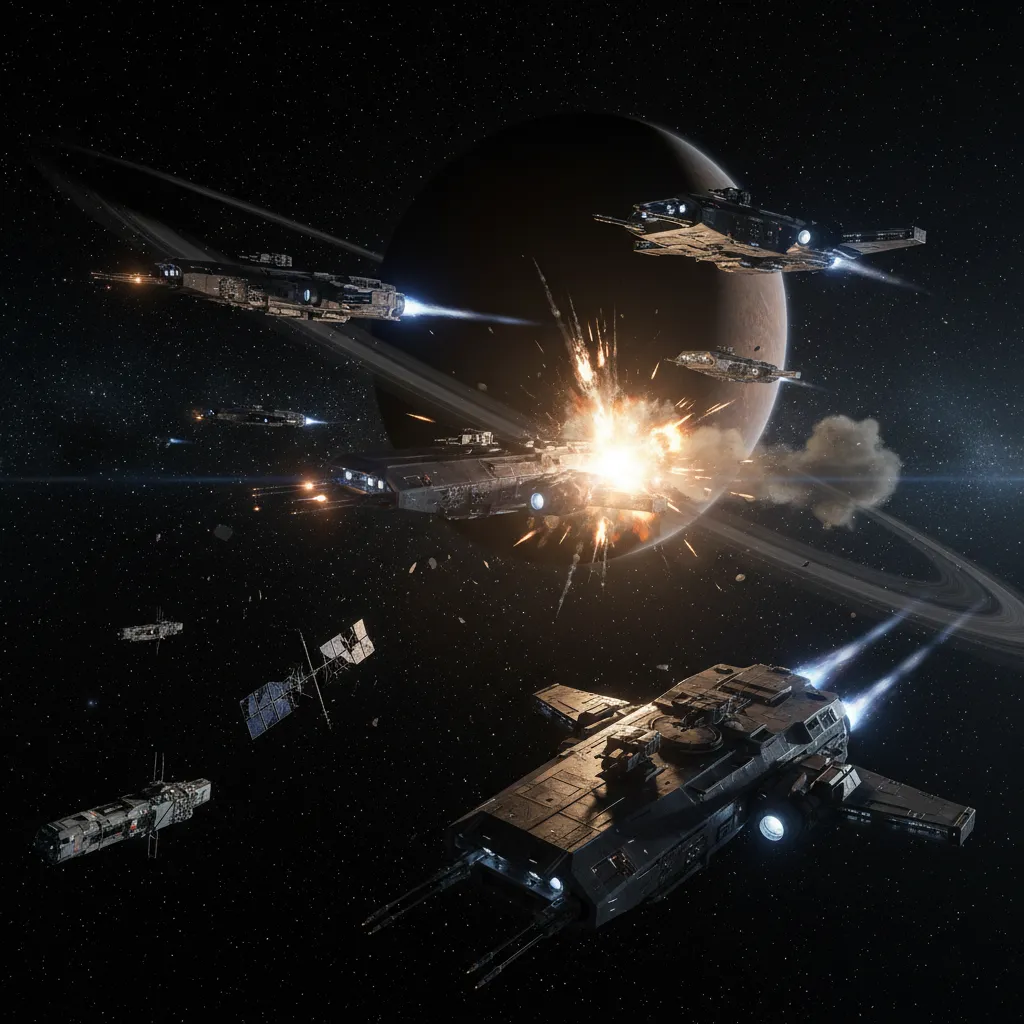
In the Human Reach series, space combat is a brutal, high-stakes affair where the laws of physics are as deadly as any weapon. Unlike the stylized dogfights of blockbuster movies, these hard science fiction battles are grounded in realism—every action, every shot, and every maneuver is shaped by the unforgiving environment of space.
Physics Over Firepower: The Realities of Space Combat
Combat scenes in Human Reach never forget the basics: heat, mass, and inertia matter as much as firepower. Ships are massive, armored, and yet, as one reader notes,
The way the space battles are described really conveys how fragile the ships are, even with armor plating.
A single well-placed projectile or a burst from a high-powered laser can turn a pressurized tube into a death trap. The vacuum of space makes heat dissipation a nightmare; as ships fire weapons and engines, internal temperatures soar, threatening both crew and systems.
-
Heat Dissipation: In the vacuum, radiators struggle to shed excess heat, making every exchange of fire a gamble with overheating.
-
Mass and Inertia: Maneuvering a warship is slow and energy-intensive. Quick turns and sudden stops are impossible—every move must be calculated, and mistakes are costly.
-
Fragility of Ships: Even with reinforced hulls, a direct hit can breach compartments, venting air and life into space.
Brutal, Messy, and Chaotic: The Cost of Every Shot
Space battles in Human Reach are not clean or glamorous. Lasers and projectiles rarely make for quick kills. Instead, they punch ragged holes, shatter bulkheads, and send shrapnel ricocheting through fragile interiors. Collateral damage is high, and the chaos of battle is palpable. Each shot counts—missed opportunities can mean disaster, and even a glancing blow can cripple a ship or kill its crew.
The series excels at evoking a sense of fragility and chaos. There are no invincible heroes here—just people fighting for survival in a hostile void. Ship maneuvers are complex and high-risk, often running up against the limits of propulsion, fuel, and human endurance.
Technology as Both Asset and Vulnerability: Ocular Implants in Sci-Fi Warfare
Human Reach also explores the personal cost of advanced technology. Ocular implants—common among intelligence operators—offer real-time data, tactical overlays, and even basic controls projected directly into the user’s field of vision. These upgrades provide a clear advantage in the chaos of battle, but they come with a dark side.
When protagonist Donovan is captured, his ocular implant becomes a tool for psychological torture. A vengeful enemy hacks the device, projecting horrifying images directly into Donovan’s mind. In this hard science fiction world, closing your eyes offers no escape—technology that once gave an edge can quickly become a weapon against its user.
Warfare beyond Earth, as depicted in Human Reach , is dangerous, inefficient, and costly. Every innovation brings new risks, and the psychological toll of combat—amplified by the vulnerabilities of advanced tech—reminds us that space is as much a battlefield for the mind as it is for machines.

Geopolitics Goes Interstellar: America and China’s Fractured Futures
In the Human Reach series, science fiction geopolitics gets a gritty, realistic upgrade. The story thrusts readers into a future where the classic “space race” has evolved into a full-blown interstellar struggle for survival and dominance. America, once the undisputed leader, now finds itself an aggressive expansionist power—but no longer the top dog. This echoes the anxieties of today’s world and the nostalgia of old-school space politics fiction, blending the spirit of Flash Gordon with the calculated brinksmanship of 20th-century great-power rivalries.
The China Japan space race is front and center, but the field is crowded: Russia and India also compete for planetary stakes. Alliances are as fragile as they are strategic, forming and dissolving the moment one side gains an advantage. The author skillfully avoids painting any nation as purely good or evil. Instead, each power acts out of self-interest, with alliances that are mercenary and fleeting. This approach subverts the simplistic “East vs. West” dynamic common in both classic and modern science fiction, offering a nuanced look at how nations might truly behave when the stakes are cosmic.
The narrative doesn’t shy away from acknowledging its pulp roots. There are deliberate nods to the “yellow peril” tropes of early sci-fi—villains like Ming the Merciless and Killer Kain are replaced by the People’s Liberation Army and their fleet of space battleships. Yet, the series never falls into caricature. Instead, it uses these references as meta-commentary, highlighting how old fears and stereotypes are reimagined for a new era. American crew members even refer to their adversaries as “the Hans,” a direct callback to Anthony Rogers and his underdog gang in Buck Rogers lore. But here, the conflict is less about racialized villainy and more about the clash of pluralist versus authoritarian societies.
The war’s deeper causes are rooted not in ideology but in the harsh realities of space. The discovery of dead zones and barren regions—territorial dead-ends—forces nations into desperate gambits. When the American and European space borders are revealed to be adjacent to a vast dead zone, the true stakes of the conflict become clear. As one character notes,
“Through most of the series, there’s a sense of the war being equal parts pride and blunder.”
Suddenly, the war is not just about economic power or prestige, but about which cultural tradition will define humanity’s future.
President Delgato, a complex figure inspired by contemporary American politics, embodies this tension.
“He doesn’t accept that American might and righteousness can’t fix problems. And he believes the world went wrong when America stopped being the top superpower.”
With the U.S. holding only 3.25 habitable worlds compared to its rivals’ greater gains, the stakes are existential. The fight is not just for territory, but for the right to shape human civilization for generations to come.
Broken Dreams and Abandoned Futures: What Happened to the Solar System?
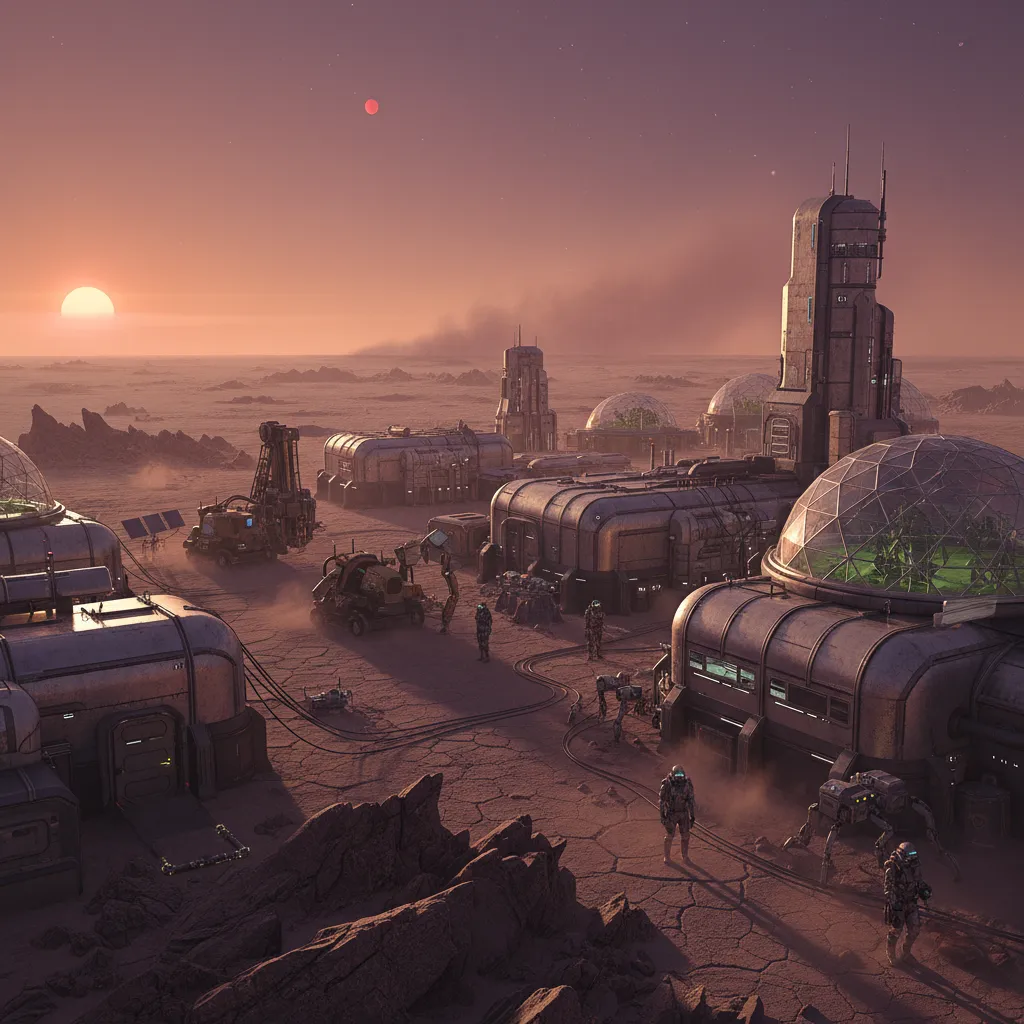
In the Human Reach series, the solar system stands as a silent witness to humanity’s restless ambition and the relentless march of technological progress. Once, the dream of solar system colonization burned bright. The Apollo era and the early books of The Expanse painted vivid pictures of domed Martian cities, bustling asteroid colonies, and the slow, determined process of terraforming in science fiction . But as the series unfolds, these dreams are left behind—overshadowed by the lure of lush, habitable worlds beyond the Sun.
The domes and covered canyons on Mars are becoming a sad little historical footnote.
When humanity gains reliable access to new, Earth-like planets orbiting distant stars, the old promise of life in the solar system’s harsh environments quickly fades. Why struggle to survive in a frozen desert or a hollowed-out asteroid when entire new worlds await? The once-hopeful colonies on Mars, Kalisto, and the Belt become relics, their infrastructure abandoned and their stories half-remembered. These places, once the focus of asteroid impact science fiction and dreams of terraforming, now serve as haunting reminders of how quickly ambitions can shift.
-
Mars: Once the crown jewel of human ingenuity, its terraforming stations and covered canyons now gather dust, their purpose lost as settlers move on.
-
Kalisto and Ceres: Surface bases, once bustling with life, now stand empty—monuments to a future bypassed.
-
Asteroids: Half-hollowed rocks drift through space, their tunnels echoing with the ghosts of miners and engineers who dreamed of prosperity.
Yet, these abandoned outposts are not simply ruins. They are evidence of a future that was “born after the Rock, but died quickly.” The “Rock”—a reference to catastrophic asteroid impacts—serves as a historical nudge, not an end. Such events force change, but do not erase memory. The traces of that first wave of colonization linger, layered beneath the new realities of interstellar expansion.
This cycle of ambition and abandonment highlights a key theme in the Human Reach series: progress is not always linear. Sometimes, humanity sidesteps its own visions, leaving behind not just failed projects, but entire ways of life. The ruins of Mars and the Belt are not just failures—they are testaments to how quickly humanity will drop the difficult or unprofitable in favor of the easy and the lush. The dream of solar system colonization is not refuted or fulfilled; it is simply left behind, a “sad little historical footnote” in the shadow of greater opportunities.
In this way, the series connects its gritty, workaday worlds to the solar system’s past. The abandoned infrastructure and half-finished terraforming projects are more than scenery—they are reminders that every leap forward leaves something behind, and that the future is built atop the ruins of dreams that once seemed inevitable.
Wild Card: Art, Madness, and the Genetic Lottery—What Is Lost in Future Progress?
In the Human Reach series, the struggle for survival on distant worlds pushes humanity to embrace genetic enhancement sci-fi as a new normal. On the surface, this seems like progress—a way to ensure the nation’s survival and give future generations a fighting chance. But beneath the promise of stronger, healthier humans lies a haunting question: What do we lose when we start editing out the quirks and flaws that have shaped our most brilliant minds?
Genetic Enhancement: A Double-Edged Sword
As genetic engineering becomes routine, the focus shifts from curing disease to optimizing personality and mental health. Gene complexes even marginally linked to schizophrenia, depression, or moderate anxiety are quietly erased. The story’s narration is blunt:
“In blindly paving over gene complexes marginally associated with schizophrenia, depression, and even moderate anxiety, we're preventing the slightly mad geniuses who have produced so much of our great art from ever being born.”
This is not just a medical or ethical debate. The future of human creativity is at stake. By carving out the genetic roots of what some call “madness,” society risks erasing the very spark that has fueled centuries of artistic achievement.
The Cost to Culture: Safe, Commercial, and Predictable Art
In the world of Human Reach , the art that survives is described as “hyperrealistic, commercial, and cowardly.” The wild, unpredictable energy that once drove artists, writers, and musicians is replaced by work that is technically perfect but emotionally flat. The series meditates on this loss, suggesting that the edge and brilliance of an uncertain mind may be gone forever.
Art becomes safer, more marketable, but less daring.
Stories lose their rawness and originality.
-
The unpredictable, sometimes uncomfortable, genius is nowhere to be found.
Existential Risks for Art and Culture
The critique of genetic engineering here goes beyond simple ethics. It asks if, in our quest for perfection, we risk erasing the “wild card” traits that make human culture vibrant and innovative. The Human Reach series themes dig deep into this debate, showing how scientific progress can reshape not just societies, but the intangible spark of creativity itself.
What Societies Choose—And What They Lose
The story’s unsettling idea is clear: In engineering ourselves for success, we may smooth away the vibrant, jagged lines of innovation. The debate is not just about survival or politics, but about the soul of humanity—what makes us dream, create, and reach beyond the ordinary.
Conclusion: Grit in the Stars—Why Human Reach Matters for Sci-Fi’s Future
The Human Reach series stands as a bold new landmark in hard science fiction, not because it promises us a brighter tomorrow, but because it refuses to lie about the cost of getting there. In a genre often split between glossy optimism and grim cynicism, Lumpin’s work is a breath of fresh air—one that might burn a little on its way in. For anyone seeking sci-fi book recommendations that challenge, unsettle, and provoke, Human Reach is essential reading.
Unlike many popular series, including the likes of The Expanse , Human Reach doesn’t glamorize the future or offer easy answers about space, power, and progress. Instead, it insists on narrative honesty. The conflicts in these books are never reduced to the whims of a single villain or the fever dreams of conquest. As the source material notes, “the story never drops into making the war about some individual's megalomania or mad dream of conquest. It's a believable conflict with coherent motives all around, and the tides of war reflect that.” This is a future where every action has consequences—moral, political, and deeply personal.
What sets Human Reach apart is its willingness to get its hands dirty. The series lingers on the ragged edges where dreams, politics, and human messiness collide. It challenges our nostalgia for both the past and the future, refusing to let us hide behind the comfort of simple heroes or inevitable progress. In doing so, it delivers a much-needed reality check for sci-fi fandom—a reminder that space colonization, if it comes, will be shaped by the same irrational hatreds, ambitions, and compromises that define our world today.
For readers tired of formulaic optimism or the easy cynicism that sometimes infects hard science fiction, Human Reach offers something different. It’s not about bigger guns or flashier heroes, but about the consequences of every step into the unknown. The series promises little—except that nothing will come easy, and that progress is always a double-edged sword. As one might ask,
For anyone who’s ever looked at science fiction and wondered, 'Could we actually get there?'—these books demand attention.
Ultimately, Human Reach reminds us that the future is written not just in stardust, but in sweat, error, and the stubborn stains of history. Its hard truths and complex futures offer a vital jolt for a genre sometimes too fond of wishful thinking. If science fiction’s real power lies in its willingness to ask the hard questions about our future, then Human Reach is not just relevant—it’s necessary. For those seeking the next evolution in hard science fiction, this series is the answer.
TL;DR: If you’re seeking a space series that sidesteps the usual clichés in favor of messy geopolitics, hard science, and unvarnished frontier life, John Lumpin’s Human Reach series delivers a biting, nuanced vision of humanity’s future amongst the stars.
